Digital vs NFC Business Cards: Which Is Better for Growing Your Local Brand?
A practical comparison for Indian business owners of traditional, digital, and NFC business cards — how each helps discovery, saves contacts, and drives customers to leave reviews, with tips for using ReviewUplift tools effectively.
Understanding the three options
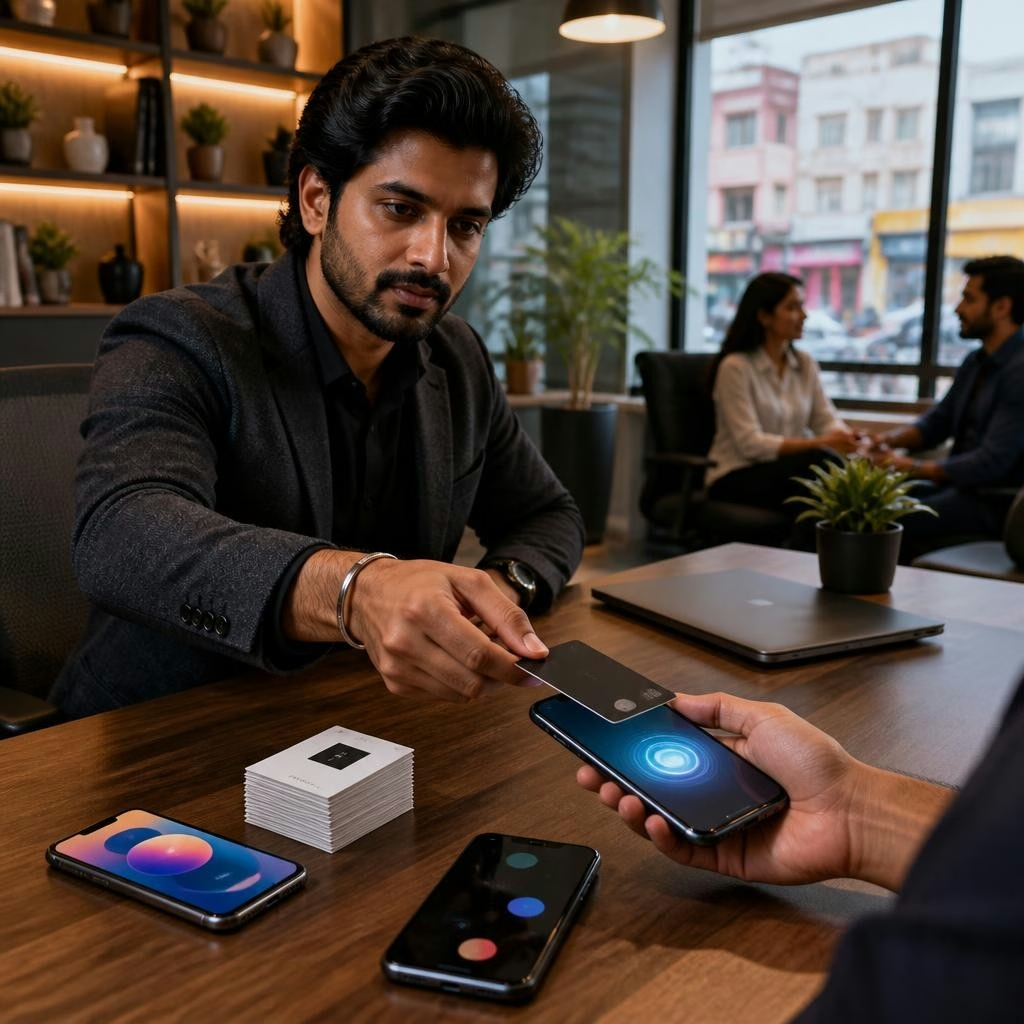
When choosing how to share your contact and business profile, you’re usually deciding among three approaches: printed business cards, digital business cards (a shareable link or QR that opens a profile), and NFC cards (tap-to-open profiles). Each has different strengths for first impressions, ease of sharing, and follow-up. ReviewUplift supports digital business cards and NFC business and review cards, so businesses can test both modern formats alongside traditional materials.
How each format helps customers discover your business
Printed cards remain useful for in-person networking and leave a tangible reminder. Digital cards and QR codes make it easier to share a detailed online profile instantly — useful when you want prospects to view services, hours, and maps. NFC cards reduce friction further by opening a web profile or review link with a single tap, which can increase the likelihood a customer looks up your business right away. For discovery, the faster a customer arrives at your online listing, the more quickly they can verify location, hours, and reviews.
Saving contact details: reducing friction matters
The primary practical difference is how easily customers can save your contact. Traditional cards require manual entry. Digital cards and QR codes typically offer a one‑tap save or ‘add to contacts’ option, and NFC can trigger the same flow without scanning. Reducing steps increases follow-up callbacks and appointment bookings. Consider the typical tech comfort of your customers — younger or tech-savvy audiences will adopt digital and NFC options faster, while some segments may still prefer a printed card.
Which format drives reviews most effectively
To convert a satisfied customer into a visible online review you need low friction and a clear call to action. NFC review cards and tabletop standees that link directly to a review form remove steps between a good experience and a posted review. One customer report specifically praised ReviewUplift’s NFC review cards and tabletop standee for making it significantly easier for patrons to leave Google reviews. Combining an on‑table NFC or QR prompt with a polite staff request and a simple on-screen prompt usually yields the best results.
Practical considerations for Indian business owners
Before switching formats, evaluate device compatibility among your customers, your point‑of‑sale flow, and staff habits. Many modern smartphones support NFC and QR interactions, but adoption varies by region and customer segment — check what your regulars use. Also weigh durability and hygiene (printed cards and stands are physical assets you control) against the convenience of digital links (easy to update). If you rely on walk‑ins — cafés, restaurants, salons — in‑place prompts (standees, stickers, NFC cards) usually outperform purely digital-only outreach.
How to implement these tools with ReviewUplift
If you decide to adopt NFC or digital cards, combine them with a review-management workflow. ReviewUplift offers NFC business and review cards, review card stands and stickers, digital business cards, and review management software to collect, triage, and respond to feedback. Best practices: place a standee or NFC card where customers complete a transaction, train staff to ask for feedback at the right moment, and use ready response templates and the platform’s tracking to follow up on negative feedback privately. Prompt, consistent responses help turn reviews into improved reputation over time.
Which option to choose: a simple rule
If your business depends on quick, in‑place interactions (restaurants, retail, clinics), prioritize NFC and tabletop review prompts plus printed reminders — they minimize steps to a review. If you often meet prospects offsite or digitally (B2B, consultancies), a well‑designed digital business card that is easy to share via WhatsApp or email may be more effective. Many businesses find a hybrid approach—printed cards with a QR, a digital card link in follow‑up messages, and NFC/standees in‑store—gives the best coverage. Use ReviewUplift’s review management software to measure which channel drives the most engagement and refine your approach accordingly.
Customer review


Article by
ReviewUplift
ReviewUplift is an online platform that helps businesses manage and improve their online reputation. In today's digital age, online reviews can make or break a business's reputation, and ReviewUplift aims to provide businesses with the tools and resources they need to stay ahead of the game.